George
SCOTTISH ROMANCE: My Sinful Surrender to a Highlander Werewolf (Scottish Werewolf Pregnancy Romance) (Historical Medieval Shape Shifter Paranormal Science Fiction Short Stories)George is the principal agent of Mary’s first marriage and the force that makes that marriage intolerable. Nearly fifty while Mary approaches thirty, he expects her to manage the household, satisfy his exacting domestic demands, submit to his sexual appetites, and produce the son he regards as necessary to his future. His eventual refusal to reclaim her, made in the language of land and usefulness, strips away the marriage’s remaining pretense and allows Mary to choose a different life.
Identity and Household Authority
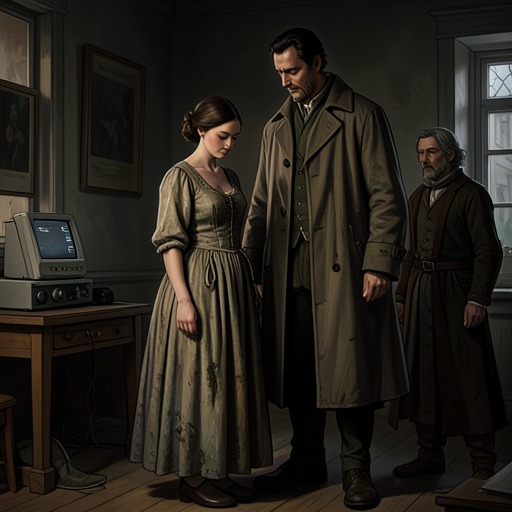
George’s authority is rooted in marriage, property, and the domestic order surrounding him. Mary travels to the nearby town to obtain the household goods he requires, including a particular kind of tea and lemons, because failing to provide them may provoke his anger. She returns exhausted by heat, humidity, the rough carriage road, and the restrictive clothing required for the journey, yet still hurries to tidy herself and the house before dinner so that George will not come home to anything that might make him angry. Her labor is therefore not simply household maintenance; it is continuous emotional management of a volatile husband. George also treats the landscape around his home as an extension of his ownership. After meeting Robert, who lives about half a day away, he comes home drinking and rages that Robert will not sell him the pond situated on land George already owns. George wants the water for his trees and horses and considers it absurd that another man can own the water while he owns the land. The dispute exposes the same possessive logic that governs his marriage: what matters to him is not only what he has, but whether every useful part of it is under his control.
Marriage, Coercion, and Violence
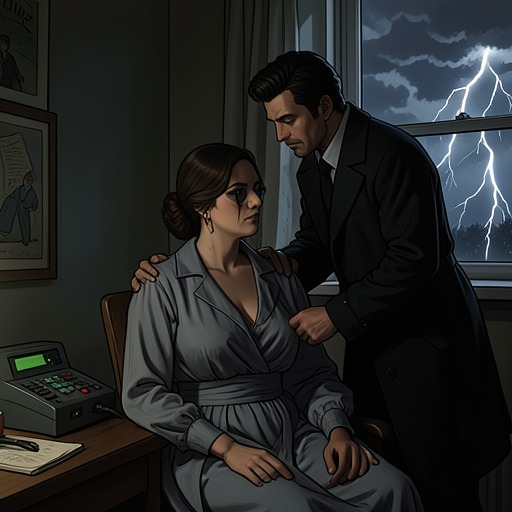
For twelve years, George has demanded what the narrative describes as his wifely duties, and Mary has submitted because she has no practical power to refuse him. The encounters are presented from her perspective as unwanted, unpleasant, and violating rather than reciprocal intimacy. Every few months, George invokes the absence of an heir as an excuse to assault her, converting the social expectation of fertility into a weapon against her body. Mary has tried everything she can to become pregnant and has resigned herself to the likelihood that it will not happen, while privately wishing that George would seek satisfaction elsewhere. His physical presence intensifies her revulsion: she associates him with a sweaty bald head, a clammy hairy belly, and thin limbs, while the repeated drunken advances have damaged her ability to see beauty even in herself. When George returns from drinking at the pub, Mary often tries to be asleep or to pretend that she is asleep. Sometimes the performance protects her; sometimes it does not. Their separate bedrooms offer her slightly more rest because she need not listen to him snore, but the separation provides no dependable safety. The marriage’s coercive structure becomes explicit when George enters Mary’s room after she has removed her clothes and begun washing herself with a cool cloth. He bursts through the door after finishing his wine, pushes her onto the bed, forces her thighs apart, and uses her body before stumbling back to his own room. Mary is left to clean herself again and confront the wreckage of her bed. The scene gives concrete form to the larger pattern: George’s access to her is treated as automatic, while her discomfort, disgust, and exhaustion have no authority within the household.
Rejection and the Loss of Possession
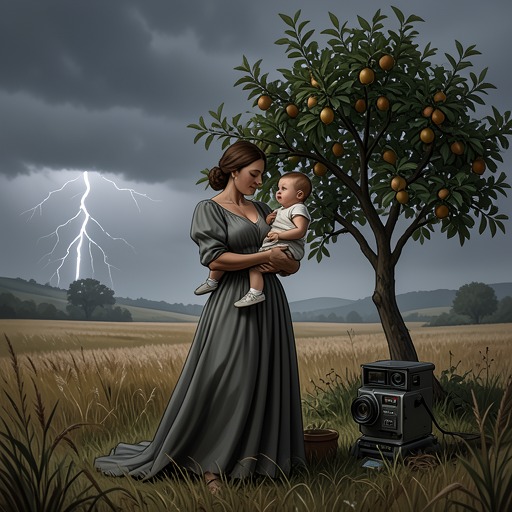
George’s relationship to Mary changes when she is no longer useful to the role he has assigned her. Thomas tells her that George does not want her back and has said that they may do with her as they please because he will not surrender his land for a useless barren woman. The statement links Mary’s value directly to fertility and property. She is not described as a wife whose safety or dignity matters, but as an exchangeable burden whose supposed barrenness is less valuable than the land George refuses to give up. George later encounters Mary and Thomas in person. He greets Thomas, sends a message to Robert to keep his pond, and then notices Mary’s rounded pregnant belly. The discovery reveals that Mary is carrying the child of her new lover, overturning George’s assumption that her failure to bear an heir was an inherent defect. Thomas places an arm around her shoulders and declares that she is taken care of, while Mary leans against him and gently touches her swollen belly. George’s former claim over her has been displaced by a relationship in which protection, pregnancy, and belonging are no longer defined by him.
Narrative Function and Significance
George embodies the convergence of patriarchal marriage and proprietary power. He expects obedience in the kitchen, obedience in the bedroom, and obedience to the economic arrangements he makes around land and water. His anger over Robert’s pond parallels his treatment of Mary: both the pond and the wife are imagined as resources that should remain available to the man who claims them. Yet the comparison also exposes the moral failure of that worldview, because Mary’s body cannot be made fertile through command and cannot remain emotionally possessed once she finds a path out. His rejection is consequently more decisive than a direct defeat would have been. By calling Mary useless and refusing to sacrifice land for her, George believes he is reaffirming his priorities; instead, he releases her from the marriage’s enclosure. Her pregnancy with Thomas becomes not merely a new domestic development but a reversal of George’s central accusation. The man who demanded an heir is confronted with evidence that the problem was not Mary’s incapacity to conceive, but the loveless and violent conditions of their union. George’s final appearance leaves him facing a woman who is no longer waiting for his approval, while Mary stands beside Thomas with a future George can neither command nor reclaim.